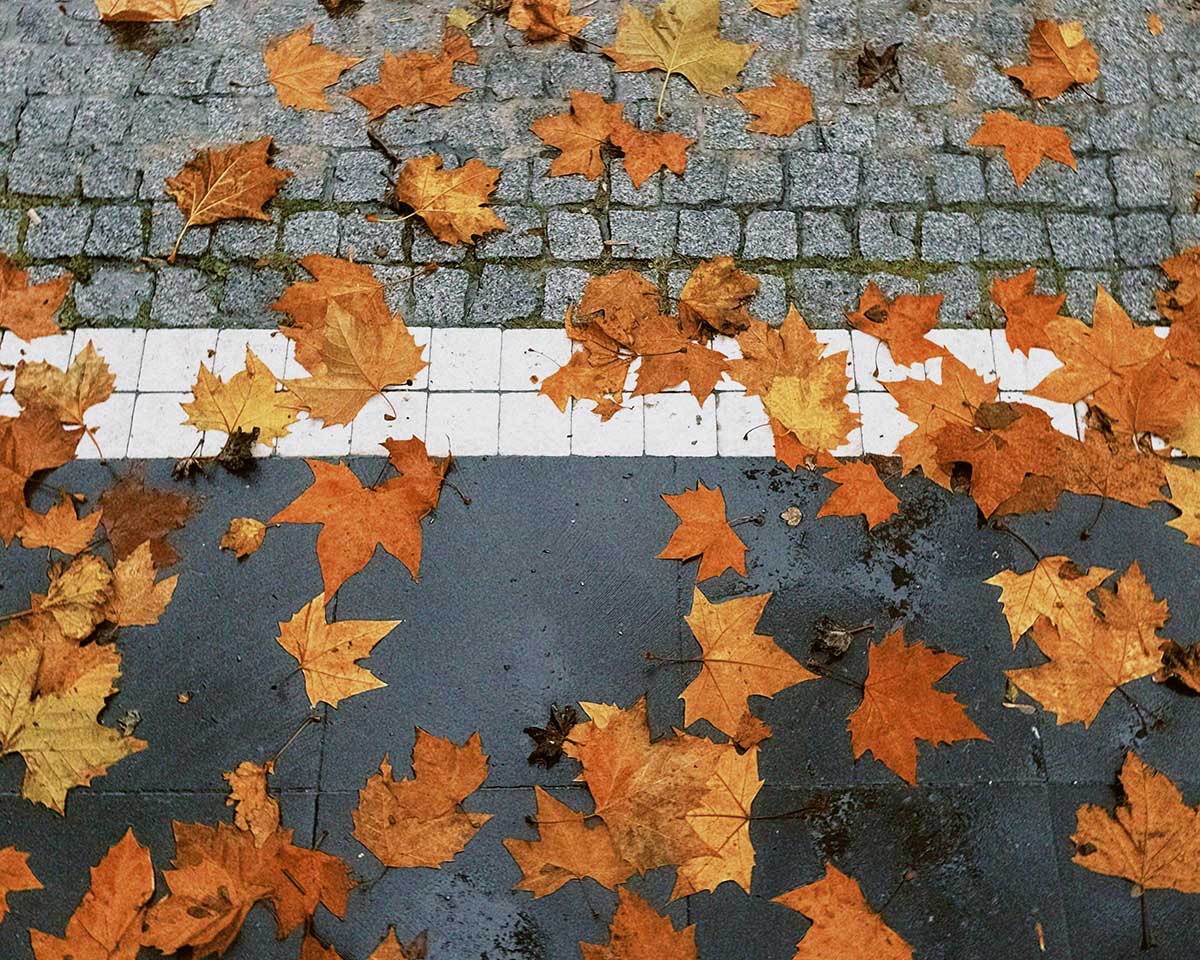
As autumn settles in and the trees release their leaves, I find myself drawn to the intricate patterns that nature creates in the most unexpected places. A fallen leaf, weathered and imperfect, often holds within it a story—a pattern of veins, edges softened by time, and a unique shape that will never be repeated. These delicate patterns are more than just beautiful to look at; they are the essence of imperfection and change, elements that inspire my beadwork.
Fallen Leaves, and Its Beauty
There’s something almost meditative about watching leaves drift to the ground. Each one is a testament to the passage of time. The veins of a leaf form an intricate network of lines, delicate yet strong, much like the structure of our own experiences. The slight curl of a leaf’s edge, where it’s been kissed by the wind or weathered by rain, reminds me of the subtle irregularities that give nature its charm.
In Japanese aesthetics, this idea of wabi-sabi—finding beauty in the imperfect—is deeply intertwined with how we view the natural world. And fallen leaves are a perfect example of this philosophy. As they decay and transform into something new, they embody both beauty and impermanence. This is where nature and art meet, and it’s also where my beadwork finds its inspiration.
Patterns in Nature
Whether it’s the network of veins in a leaf or the swirling shapes of tree branches, patterns in nature are both organic and intricate. These patterns repeat across seasons, but no two leaves are ever exactly the same. They offer endless variations, each one shaped by wind, light, and the environment around them. What’s fascinating is that these patterns are often asymmetric or irregular, which is exactly what I try to capture in my beadwork.
The irregularity of nature—like the gentle asymmetry of a leaf’s veins or the uneven texture of a bark—reminds us that perfection lies not in uniformity, but in the subtle differences. Just as no two leaves are alike, no two beadwork designs should be identical. The beauty of each piece lies in the uniqueness of the pattern, the subtle variations in color, texture, and form.
Beads as Nature’s Language
Much like how a leaf’s veins form an organic design, beadwork uses tiny, deliberate decisions to form a cohesive whole. Each bead represents a part of a larger pattern, carefully chosen to capture the essence of the natural world. I often use shades of greens, browns, and soft metallics to reflect the earthy tones of fallen leaves, and the intricate weaving of beads mimics the natural veins and shapes I observe in the outdoors.
When I work on a piece, I think of it like creating a small ecosystem—where each bead is a part of a bigger picture. Just as a leaf’s veins support the life of the plant, the beads form the structure of a design, holding together the delicate nature of the piece. Sometimes, the pattern may have a slight curve or irregularity, much like a leaf’s imperfect edges. These imperfections are what give each design warmth and character.
Are They a Reflection of Life’s Journey
As I work with beads, I am reminded of the beauty in the cycle of change. Much like how a leaf falls from a tree and becomes part of the earth again, my beadwork is a meditation on time, transformation, and nature’s ever-changing patterns. Each piece I create is an expression of this flow—how things grow, change, and transform.
Fallen leaves remind me to embrace imperfection, to see beauty in decay, and to honor the small, quiet moments. The same is true in beadwork. Each bead tells a story, just as each leaf carries the history of its tree. Together, they remind us that there is beauty in everything—even in what may seem small, fleeting, or imperfect.
Finally …
The next time you walk through a park or garden and see a leaf on the ground, take a moment to admire its pattern. Look at the veins, the texture, the way it’s been shaped by time and weather. And think of how those patterns translate into art, whether it’s beadwork or another form of creativity. Nature has a way of showing us that perfection isn’t necessary to create something beautiful. Sometimes, all it takes is a little irregularity, a touch of change, and a lot of heart.